Have you noticed how “Platform Engineering” is everywhere lately? You may hear it in meetings or even see it in posts. And it often comes with one big idea: building Internal Developer Platforms (IDPs). The idea is simple. Teams want building software to be easier, not harder. Let’s break it down into plain terms without getting too technical.
How Did We Get Here?
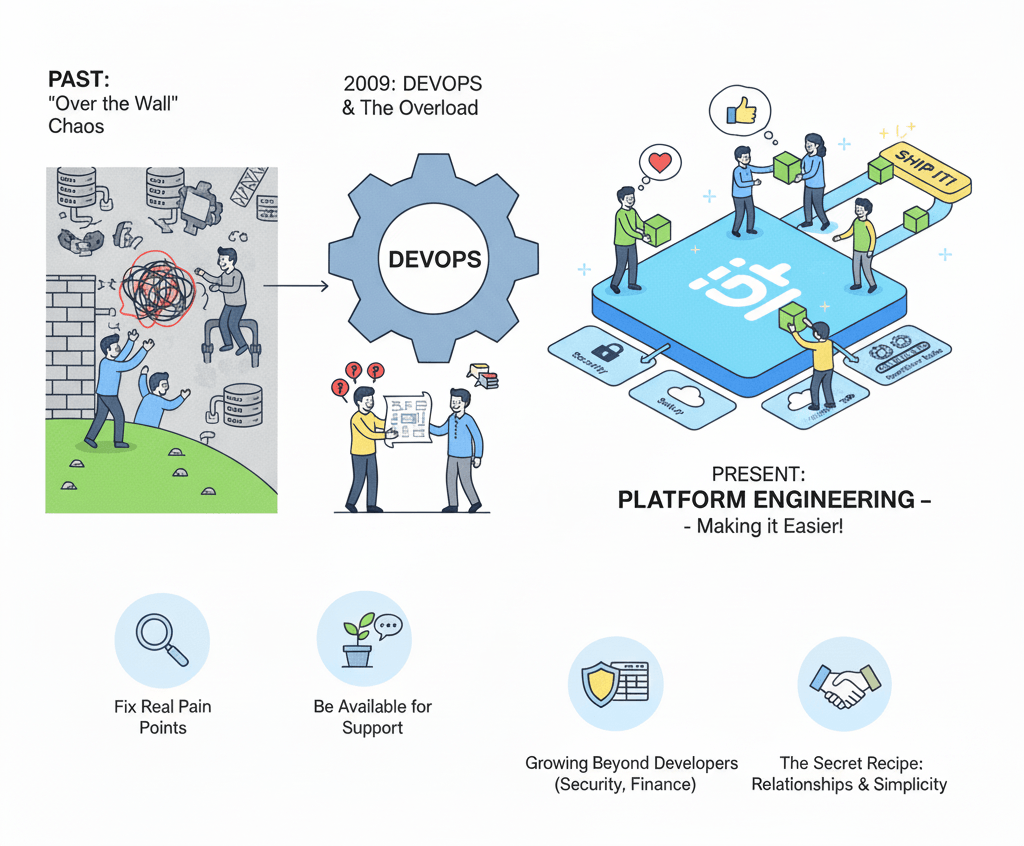
In the past, developers wrote code and handed it to operations teams, who had to figure out how to run it. This “over the wall” approach caused tons of delays and finger-pointing when things broke.
Then came DevOps around 2009. The big idea was simple: to get developers and operations people working together. Developers began taking responsibility for their own code in production. It sounds good in theory, but there are limitations.
But here’s what actually happened: developers got stuck with too much extra work. They had to learn cloud platforms, security, and tons of new tools. Teams developed their own approaches to deploying code. And this sometimes led to hundreds of distinct approaches within a single company. And that caused significant operational disruption.
Enter Platform Engineering
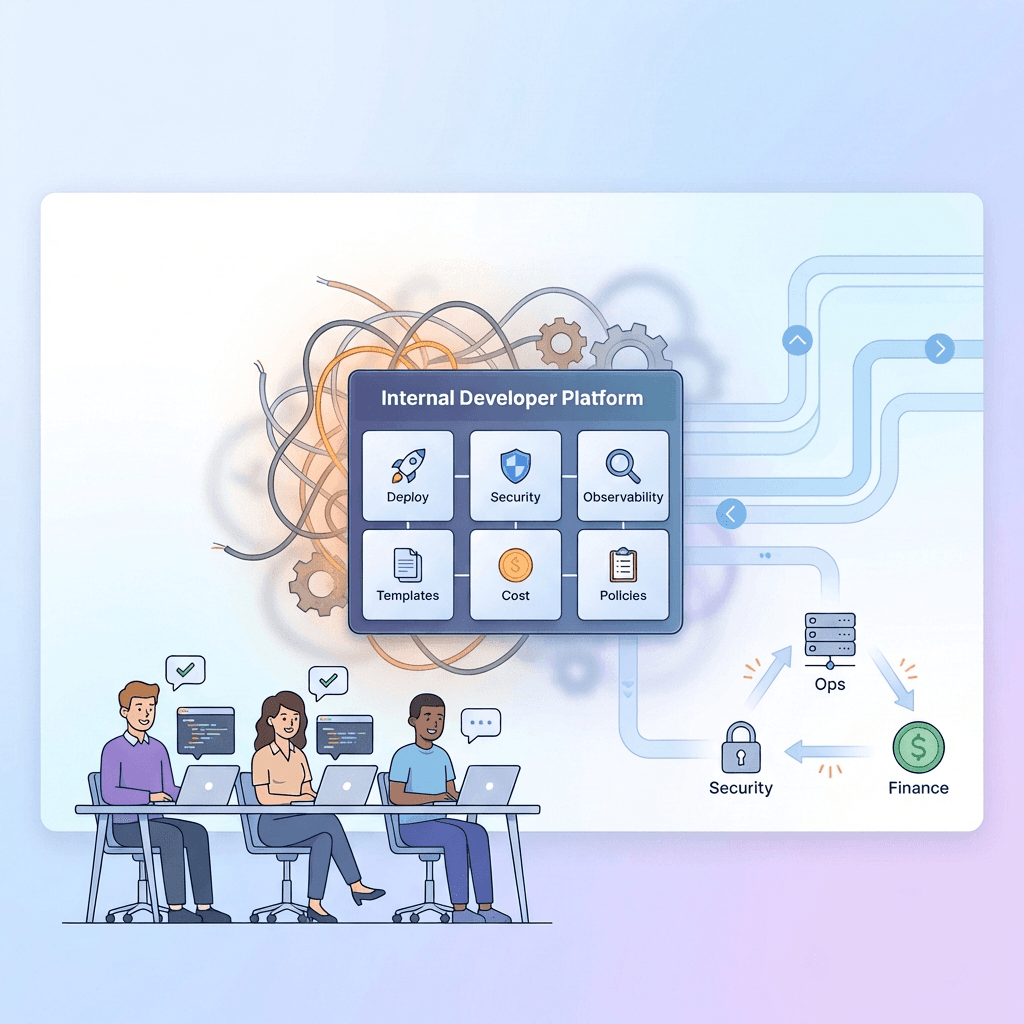
Platform engineering solves this overload problem by providing a shared platform that handles the hard parts. It can handle setup, security, and the boring repetitive work. So you can focus on writing good code and shipping it.
Building an IDP That Developers Actually Want
The key to a successful Internal Developer Platform is to build something developers love. It should not be something they’re forced to use. Here’s how:
Fix Real Pain Points First
Start by asking: “What tasks do developers hate doing?” Maybe it’s setting up new projects or fixing broken deployments at 2 AM. Solve these headaches first, and the rest will be easy.
Start Small
Don’t try to build everything at once. First, pick one problem, solve it well, and then add more features. Be honest about what your platform can’t do yet. Developers respect honesty more than promises.
Be Available for Support
Developers using your platform will often hit roadblocks. And so be there to help! Every problem they share is an opportunity to improve your platform.
Stay Super Transparent
You will also need to show your progress openly. Sometimes you should also invite developers to see what you’re working on. You can also conduct brief weekly chats to discuss challenges and wins. This can build trust and get you helpful feedback.
Growing Beyond Developers
Other teams will want in if your platform succeeds. For example, security teams will need to add scans and policies. Finance teams will also want cost tracking features.
You can help these teams work with developers smoothly. Nobody likes surprise rules or blocks that appear without warning.
The Secret Recipe
The best platforms solve more problems than they create. Technical tools matter less than you might think. Using Kubernetes or CI/CD tools won’t save a platform that doesn’t meet real needs.
Focus on relationships with your developers, listen to them, and make their lives easier. Keep things simple when possible.
Do this right, and you won’t just have a platform, but you’ll also have a tool that transforms how your company builds software.